-
24
2026-09
SOC and SOH Explained: Key Battery Parameters
Meta Description: 2026 technical briefing on SOC and SOH explained as key battery parameters for industrial lithium packs. Clear definitions, BMS estimation methods, LFP operating windows (20–30 % SOC floor, opportunity charging 15–40 %), impact on cycle life and TCO, comparison table, monitoring checklist, FAQ and decision framework for forklifts, AGVs, floor sweepers and heavy equipment.State of Charge (SOC) and State of Health (SOH) are the two primary parameters that determine both daily runtime and long-term asset value of every industrial lithium battery. In 2026 fleet and facility managers who treat them as simple dashboard numbers miss the operational levers that control cycle life, opportunity-charging effectiveness, residual capacity and total cost of ownership.This briefing defines both metrics precisely, shows how modern Battery Management Systems estimate them, quantifies the operating windows that protect them, and supplies a practical selection and monitoring framework for LiFePO₄ packs used in forklifts, AGVs, floor sweepers, excavators and other industrial equipment.Table of Contents• State of Charge (SOC)• State of Health (SOH)• SOC vs SOH: Critical Distinctions• BMS Estimation of SOC and SOH• Operational Importance of Accurate SOC and SOH• Operating Windows That Protect Both Metrics• Comparison Table: SOC and SOH at a Glance• Practical Monitoring Implications• Selection and Monitoring Checklist• Frequently Asked Questions• Decision FrameworkState of Charge (SOC)State of Charge is the remaining usable capacity of the battery expressed as a percentage of its current maximum capacity.SOC = (Remaining Capacity ÷ Present Maximum Capacity) × 100 %• 100 % SOC = fully charged relative to today’s available capacity• 0 % SOC = discharged to the BMS cutoffSOC functions as a fuel gauge. It rises during charge, falls during discharge, and changes within minutes or hours. It does not indicate how much capacity the battery has lost since it was new.For industrial LiFePO₄ packs the practical operating window that maximises life is a residual SOC floor of 20–30 % under normal shift conditions, with periodic full charges to 100 % for cell balancing and coulomb-counting recalibration. Short opportunity charges that restore 15–40 % capacity are cycle-life neutral and keep the pack higher in its efficient voltage window.State of Health (SOH)State of Health quantifies the battery’s present condition relative to its beginning-of-life (BOL) performance. The most common industrial definition is capacity-based:SOH = (Current Maximum Capacity ÷ Original Rated Capacity) × 100 %• 100 % SOH = new pack meeting nameplate capacity• 80 % SOH = typical end-of-warranty / replacement threshold for many industrial applications• 70 % SOH = common hard end-of-life threshold in some standards and residual-value modelsAdvanced definitions also incorporate power capability (SOH-P) and internal-resistance increase. Capacity fade and rising resistance accelerate after the “knee” point, commonly observed between 75–85 % SOH depending on chemistry, temperature history and depth-of-discharge patterns.Quality industrial LiFePO₄ packs are routinely rated ≥3,500–5,000 cycles to 80 % SOH at 80 % depth of discharge when operated inside recommended temperature and SOC windows.SOC vs SOH: Critical DistinctionsA pack can read 100 % SOC while sitting at only 82 % SOH. The gauge is full relative to today’s reduced capacity; the tank itself is smaller than when the battery was new. Confusing the two metrics leads to incorrect runtime expectations and premature or delayed replacement decisions.BMS Estimation of SOC and SOHNeither parameter is measured directly. The Battery Management System estimates them from voltage, current, temperature and historical data.SOC estimation methods• Coulomb counting (ampere-hour integration) – primary real-time method• Open-circuit voltage (OCV) lookup when the pack is at rest• Temperature compensation and Kalman-filter or machine-learning fusionLiFePO₄’s extremely flat voltage curve between approximately 20–90 % SOC makes pure voltage-based estimation unreliable. High-accuracy current sensors and periodic full-charge resets are therefore essential. Typical industrial SOC error without good calibration is 5–10 %; premium systems with multi-feature correction can hold 2–3 %.SOH estimation methods• Capacity test (controlled full charge followed by controlled discharge) – gold standard but disruptive• Internal-resistance or impedance tracking• Cycle-count and ampere-hour throughput models• Data-driven / cloud models that fuse voltage, temperature and historical capacity fadeBMS-reported SOH is useful for trend monitoring but should be validated periodically with a capacity test, especially near warranty boundaries or when residual value is being assessed.Packs certified to UL 2580 or IEC 62619:2022 have demonstrated that their BMS protective functions remain active under the abuse conditions that can accelerate SOH decline.Operational Importance of Accurate SOC and SOHAccurate SOC and SOH data directly affect daily operations and long-term economics:• Runtime prediction: An inaccurate SOC causes trucks to stop unexpectedly or operators to return early.• Opportunity charging discipline: Knowing true residual SOC determines whether a 20-minute plug-in restores useful energy.• Cycle-life preservation: Repeated operation below 20–30 % SOC accelerates capacity fade and shortens the path to 80 % SOH.• TCO and residual value: A pack still at 85 % SOH after five years retains significant second-life or trade-in value; one already at 72 % does not.• Safety and warranty: Many warranties require operation inside stated SOC and temperature windows. BMS logs of SOC excursions support or invalidate claims.Operating Windows That Protect Both MetricsComparison Table: SOC and SOH at a GlancePractical Monitoring ImplicationsModern industrial packs expose SOC and SOH (or capacity remaining) via the BMS interface, CAN bus or cloud telematics. Best practice is to log:• Daily minimum residual SOC• Cycle count or ampere-hour throughput• Cell-to-cell voltage imbalance• Temperature histogram• Trend of reported SOH over rolling 3–6 month windowsA sudden acceleration in SOH decline or persistent SOC estimation drift usually indicates a cell group issue, temperature excursion history, or the need for a capacity recalibration test.Selection and Monitoring Checklist• Prefer LiFePO₄ chemistry with published cycle life ≥3,500 cycles to 80 % capacity at 80 % DoD• Require UL 2580 and/or IEC 62619 certification• Confirm the BMS provides accessible SOC and SOH (or remaining capacity) data with stated accuracy• Specify residual SOC floor guidance of 20–30 % and opportunity-charge compatibility• Include periodic capacity-test protocol in the maintenance plan• Require telematics or data-logging capability for SOC/SOH trend analysis• Verify charger algorithms match the chemistry and support partial (15–40 %) charges without forcing unnecessary full cyclesFrequently Asked QuestionsCan a battery show 100 % SOC but still have poor SOH? Yes. 100 % SOC means the pack is full relative to its current capacity. If SOH is 78 %, that full charge stores only 78 % of the original energy.How often should industrial packs be capacity-tested? Annually for high-duty multi-shift fleets, or when SOH trend accelerates or residual-value decisions are required. Between tests, rely on BMS trend data.Does opportunity charging damage SOH? No. Short charges restoring 15–40 % capacity on LiFePO₄ are neutral to beneficial. They reduce the frequency of deep discharges that accelerate fade.Is there a universal SOH standard? Not yet. Capacity ratio is the most common industrial definition, but methods differ. Always ask the supplier how their reported SOH is calculated and under what test conditions.What SOC should spare packs be stored at? 40–60 % SOC in a moderate-temperature environment maximises calendar life.Decision Framework1. Treat SOC as the real-time control variable that protects daily uptime and long-term SOH.2. Treat SOH as the lifecycle asset metric that drives replacement timing and residual value.3. Specify packs whose BMS accurately estimates both and whose chemistry (LiFePO₄) and certification (UL 2580 / IEC 62619) support industrial abuse and cycle targets.4. Enforce a residual SOC floor of 20–30 % and routine opportunity charging of 15–40 %.5. Monitor SOH trend, not just absolute value, and validate with capacity tests near warranty or residual-value decision points.When SOC and SOH are understood and managed as the paired key battery parameters they are, industrial lithium packs deliver the multi-year, multi-shift performance that justifies the investment.

-
16
2026-09
Why does the battery bulge? What exactly happened inside?
The back cover of the phone suddenly tilted up while using it.After riding the electric bike for several years, the battery casing began to deform.Even the battery pack of new energy vehicles may experience local swelling.Many people's first reaction when they see this scene is:Did the battery explode from chargingIn fact, what really makes the battery "fat up" is not just a simple charge, but the fact that a large amount of gas may have already been generated inside the battery.The question is: Where do these gases come from? Why do some batteries last for several years without any issues, while others quickly start to swell?More importantly, can the swollen battery still be used?1. Why does gas produce inside the batteryUnder normal circumstances, during the charging and discharging process of lithium-ion batteries, lithium ions move back and forth between the positive and negative electrodes without producing a large amount of gas inside the battery.But if there is an abnormal side reaction inside the battery, the situation is different.For example, if the electrolyte decomposes under high temperature, overcharging, or unstable material surfaces, it may produce gases.Especially during the initial use of the battery, a layer of SEI film will form on the negative electrode surface.If this layer of film is unstable, side reactions may continue to occur, consuming electrolyte and continuously producing gas.As the gas increases, the internal pressure of the battery keeps rising, which may eventually manifest as bulging.2. High temperature is the catalyst for battery bulgingMany people are unaware that temperature has a significant impact on the internal reactions of batteries.After the temperature rises, processes such as electrolyte decomposition and material side reactions will accelerate.It can be understood as:The higher the temperature, the easier it is for many "undesirable reactions" to occur inside the battery.Therefore, batteries that are exposed to high temperatures for a long time are more prone to problems such as capacity decay, increased internal resistance, and gas production.This is also why new energy vehicle batteries require complex thermal management systems.3. Overcharging can also cause the battery to become increasingly 'fat'If the battery is in an overcharged state for a long time, both positive and negative electrode materials may exhibit abnormal reactions.Especially when the battery is close to full charge and continues to be forcefully charged, internal side reactions may significantly increase.In severe cases, not only may gas production occur, but more dangerous problems such as lithium evolution and internal short circuits may also occur.So:Sometimes bulging is just an "external manifestation" of battery problems, and the real danger may occur internally.4. After bulging, can it still be usedNot recommended.If it is found that the lithium battery in a mobile phone, electric vehicle, or other device has visibly bulged, it indicates that there is an abnormality inside the battery cell.At this point, do not continue to squeeze, needle or disassemble the battery, and do not attempt to eliminate the bulge through "discharge".For batteries with obvious deformation, heating, or odor, they should be stopped from use and professionally disposed of according to local regulations.In conclusionThe battery is bulging, it just looks like the outer shell has become 'fat'.But inside this shell, a series of complex electrochemical reactions may be occurring.High temperature, overcharging, material side reactions, unstable SEI film, and manufacturing defects may all be the reasons behind bulging.

-
03
2026-09
Why do new energy vehicles spontaneously ignite?
In recent years, new energy vehicles have rapidly become popular, but occasional spontaneous combustion incidents have also attracted public attention.Many people wonder: why do new energy vehicles still catch fire without engines and fuel?In fact, most new energy vehicle fire accidents are related to thermal runaway of the power battery.1.What is battery thermal runawayDuring normal operation, a large number of electrochemical reactions occur inside the power battery.But when the battery is subjected to abnormal stimuli, such as:Internal short circuit, overcharge and overdischarge, high temperature environment, mechanical collisionMay cause a rapid increase in internal temperature of the battery.When the temperature exceeds a certain range, continuous side reactions will occur inside the battery, releasing a large amount of heat and ultimately forming an uncontrollable heating process, which is called thermal runaway.2. Why did the battery suddenly catch fireThe interior of a lithium battery includes a positive electrode, a negative electrode, an electrolyte, and a separator.When an internal short circuit occurs, the positive and negative poles come into direct contact, generating a large amount of heat.As the temperature increases:Firstly, the SEI film begins to decompose;Subsequently, the electrolyte undergoes a violent reaction;After further heating, the positive electrode material may release oxygen;Ultimately, a large amount of heat and combustible gases are rapidly released, triggering combustion.This is also why lithium battery fires often have the characteristics of suddenness and rapid diffusion.3. What situations can easily lead to thermal runawayThe battery is impactedWhen a new energy vehicle experiences a serious collision, the battery pack may be compressed, causing damage to the internal structure and triggering a short circuit.Therefore, battery packs usually require the design of anti-collision protection structures.Long term high temperature useHigh temperatures can accelerate internal side reactions in batteries.If the cooling system is insufficient and the battery temperature continues to rise, it will increase the risk of thermal runaway.Battery agingAs the number of cycles increases, there will be:SEI film repeatedly generates and destroys;Damage to electrode structure;Internal resistance increases.Aging batteries are more prone to local heating problems.Unreasonable fast chargingDuring fast charging, a large amount of lithium ions need to be quickly embedded into the negative electrode.If the charging conditions are not suitable, lithium deposition may occur, forming lithium dendrites and increasing the risk of short circuits.4. How to prevent spontaneous combustion of new energy vehiclesAt present, power batteries mainly improve safety through various ways:The Battery Management System (BMS) monitors voltage, temperature, and current in real-time;Thermal management system controls battery temperature;Optimization of battery cell structure to improve heat resistance;Use more stable positive electrode materials.For example, lithium iron phosphate batteries have certain advantages in terms of safety due to their stable structure and high thermal decomposition temperature.In conclusionThe spontaneous combustion of new energy vehicles is not due to the fact that the battery will definitely burn, but rather the result of thermal runaway of the battery in extreme situations.The safety of power batteries is the result of the combined action of materials, cell design, battery management systems, and manufacturing processes.In the future, with the development of solid-state batteries, new materials, and intelligent monitoring technology, the safety level of new energy vehicles will continue to improve, making electric vehicles a more reliable mode of transportation.

-
25
2026-08
Will sodium-ion batteries replace lithium-ion batteries?
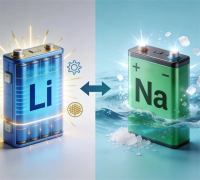
In recent years, with the rapid development of the new energy vehicle and energy storage industries, the price fluctuations and supply issues of lithium resources have garnered increasing attention. Against this backdrop, sodium-ion batteries have gradually entered the public spotlight. Many people are now questioning: Will sodium-ion batteries replace lithium batteries? The answer may not be a simple "replacement," but rather a long-term coexistence of both technologies in the future.1. Why are sodium-ion batteries receiving attentionSodium-ion batteries operate on a principle similar to lithium-ion batteries, both utilizing the migration of metal ions between the positive and negative electrodes for charging and discharging. The key difference lies in the fact that lithium batteries rely on lithium ions, whereas sodium batteries depend on sodium ions. Sodium is abundant in the Earth's crust and has more stable pricing. Therefore, the primary advantages of sodium batteries are their abundant resources and lower costs.2. What are the advantages of sodium batteriesFirstly, the cost advantage is obvious. Sodium resources are abundant and do not rely on scarce elements such as lithium and cobalt, which is beneficial for reducing battery manufacturing costs. Secondly, it has good low-temperature performance.Some sodium ion battery systems can still maintain good charge and discharge capabilities in low-temperature environments. In addition, sodium batteries can use aluminum foil as the positive and negative electrode current collectors, reducing the use of copper foil and helping to further reduce costs.3. Why can't sodium batteries completely replace lithium batteriesThe biggest issue is energy density. Due to the larger mass and radius of sodium ions compared to lithium ions, there is relatively less energy that can be stored in the same volume. At present, the energy density of sodium ion batteries is usually lower than that of mainstream lithium batteries. This means that for new energy vehicles pursuing long endurance, lithium batteries still have significant advantages. In addition, the sodium battery industry chain and manufacturing process are still in the development stage and need further improvement.4. How will the two be divided in the futureWhat is more likely to happen in the future is the use of lithium batteries in high-energy demand scenarios and sodium batteries in low-cost application scenarios. For example, lithium batteries are suitable for high range new energy vehicles, high-end electronic devices, and weight sensitive applications. Sodium batteries are suitable for large-scale energy storage, low-speed vehicles, and backup power sources for base stations. Both will have advantages in different application fields.In conclusionThe emergence of sodium ion batteries is not simply to replace lithium batteries, but to provide another option for the new energy industry. Lithium batteries have a mature industrial chain and higher energy density, and will continue to occupy an important position in the long term in the future; Sodium batteries have shown great potential in energy storage and other fields due to their resource and cost advantages. The future battery market is likely to not be dominated by lithium over sodium, but rather by the joint development of multiple technological routes. Choosing the right battery for the right scenario is the true direction of new energy development.
-
19
2026-08
Is solid-state battery a scam? By understanding these points, one will not be misled by the concept
In recent years, "solid-state batteries" have frequently appeared on the hot search list.Higher energy density, safer, longer battery life... Various promotions give people a feeling that solid-state batteries are about to be fully popularized.However, in reality, there are still limited solid-state batteries that can be installed on a large scale and produced stably.So someone asked: Is solid-state battery a scam?The answer is clear: it is not a scam, but there is indeed a "concept first" promotion in some parts of the market.1.What is a solid-state batteryTraditional lithium batteries use liquid electrolytes, and lithium ions rely on the electrolyte to move between the positive and negative electrodes.Solid state batteries attempt to use solid electrolytes instead of traditional liquid electrolytes.Its core value lies in the opportunity to improve battery safety and further match high-energy density electrode materials by changing the electrolyte system.But 'solid-state' does not mean 'automatic doubling of performance'.2. Why do everyone think it's powerfulThe biggest attraction mainly comes from two aspects.Firstly, the potential for safety.Solid electrolytes typically have better heat resistance, which can reduce the risks of leakage, volatilization, and combustion caused by traditional liquid electrolytes.Secondly, the potential for energy density.If solid electrolytes are successfully combined with lithium metal negative electrodes and other systems, there is a chance to reduce the weight of ineffective materials and improve the overall energy density of the battery.Please note that there is a keyword here:'Potential'.Being able to do it in the laboratory does not mean it can be mass-produced immediately.3. Where is the real difficultyThe biggest challenge for solid-state batteries is actually "moving from the laboratory to the factory".The contact between solids is not as easy as that between liquids.During battery charging and discharging, the electrode undergoes volume changes, and cracks, detachment, and increased interface impedance may occur between the solid electrolyte and the electrode.In addition, it is necessary to address issues such as material stability, manufacturing processes, yield rates, costs, and large-scale production.So, a high-performance solid-state battery in a laboratory is a completely different concept from being able to stably produce hundreds of thousands or even millions of battery cells.4. Why is it easy to have a sense of fraud in the marketThe problem often lies not in the technology itself, but in the way it is promoted.The term 'solid-state battery' is sometimes used in a generalized manner.Semi solid, quasi solid, solid-liquid mixed systems, and truly all solid state batteries are not exactly the same technological route.If you only see the word 'solid-state', it is easy to misunderstand that it has completely replaced liquid batteries.In conclusionSolid state batteries are not a sc am.It is a real and rapidly developing next-generation battery technology.But it is not a "magic technology" that has completely matured and is about to fully replace lithium-ion batteries.What is truly worth paying attention to is not the word "solid-state" in corporate advertising, but the type of electrolyte, actual energy density, cycle life, fast charging performance, cost, and mass production progress.Only by understanding these indicators can we distinguish between "technological breakthroughs" and "conceptual hype".Technology is worth looking forward to, but don't mistake 'what may be possible in the future' for 'what has already been achieved now'.

-
05
2026-08
What is a flexible metal ion battery
When it comes to batteries, many people's impression is of a hard 'battery cell'.But what if the battery could bend, fold, or even be sewn into clothes like paper, and still supply power normally?This is the flexible metal ion battery that has received much attention in recent years.It can not only store energy, but also adapt to complex deformations such as bending, stretching, and twisting, and is considered an important energy solution for wearable and flexible electronics.1. What is a flexible metal ion batteryFlexible metal ion batteries refer to secondary batteries that can maintain normal charging and discharging performance even when bent, curled, or deformed to a certain extent.The "metal ions" here not only include lithium ions, but also various battery systems such as sodium ions, zinc ions, potassium ions, etc.Compared with traditional batteries, its biggest feature is not higher capacity, but better mechanical flexibility.2. Why can it bendThe metal current collector, separator, and packaging materials in ordinary lithium batteries are relatively hard and easily damaged by repeated bending.And flexible batteries will use more flexible materials, such as:Flexible current collectorUltra thin electrode materialGel polymer electrolyteFlexible packaging filmThese materials work together to maintain stable electron and ion transport channels during the bending process of the battery.3. What are the advantages of flexible batteriesThe biggest advantage is adapting to complex deformations.For example, it can still work normally after bending, is lighter in weight, thinner in thickness, and easier to integrate with flexible electronic devicesTherefore, it is particularly suitable for application scenarios that require fitting to the human body or curved surfaces for installation.4. What are the main applications in which fieldsAt present, flexible metal ion batteries are mainly aimed at emerging electronic products, such as:Wearable devices such as smart bracelets and smartwatchesFlexible displayelectronic skinSmart ClothingMedical monitoring equipmentflexible sensorWith the development of flexible electronic technology, the demand for flexible energy storage devices is also constantly increasing.5. Why hasn't it been widely popularized yetAlthough research progress is fast, there are still many challenges in achieving industrialization.For example:The electrode material is prone to cracking after repeated bendingIt is difficult to balance the conductivity and mechanical strength of flexible current collectorsThe ionic conductivity of gel electrolyte still has room for improvementThe reliability after long-term cycling needs further verificationIn addition, the manufacturing process of flexible batteries is more complex and the cost is relatively high compared to traditional batteries.6. What is the future development directionThe current research focuses mainly on several aspects:Developing highly flexible electrode materialsBuilding a stable flexible electrolyte systemImprove cycle life and energy densityOptimize scalable production processesIn the future, flexible batteries should not only be "bendable", but also achieve the unity of "high capacity, long life, and high safety".In conclusionFlexible metal ion batteries are not simply "softening" traditional batteries, but the result of joint innovation in material design, structural design, and manufacturing processes. With the rapid development of industries such as wearable devices, flexible displays, and smart healthcare, the importance of flexible batteries will continue to increase. Perhaps in the near future, our clothes, watches, and even electronic skins will be continuously powered by these freely bendable batteries.

-
24
2026-07
What are overcharging and overdischarging of lithium batteries? Why does it affect battery life and even cause safety issues?
When using mobile phones, electric vehicles, or energy storage devices in daily life, we often hear two words:Overcharging and overdischarging.Many people know that they can damage batteries, but they do not understand the reasons behind it.In fact, the stable operation of lithium batteries relies on strict voltage range control. Once it exceeds this range, the internal structure of the battery may undergo irreversible changes.1. What is overcharging of lithium batteriesThe so-called overcharging refers to:After the battery has reached a fully charged state, it continues to charge.Under normal circumstances, lithium ions will detach from the positive electrode during charging, migrate through the electrolyte to the negative electrode, and embed into the negative electrode material.But when the negative electrode is close to saturation, continuing to input lithium ions will result in a situation of "nowhere to place".At this point, metal lithium may precipitate on the negative electrode surface; Continuous decomposition of electrolyte; The SEI film is constantly damaged and rebuilt; This is the main problem caused by overcharging.2. Why is overcharging dangerousFirstly, overcharging accelerates battery aging.Due to the increase in side reactions, a large amount of active lithium will be consumed, resulting in a decrease in the amount of recyclable lithium, manifested as:Capacity reductionInternal resistance increasesShortened cycle lifeSecondly, overcharging may pose safety risks.When there is severe overcharging, the positive electrode material may undergo structural changes and even release oxygen; At the same time, lithium precipitated from the negative electrode may form a dendritic structure.If lithium dendrites pierce the diaphragm, it may cause an internal short circuit and lead to uncontrolled heat generation.3. What is lithium battery over dischargeOverdischarging is the opposite of overcharging.It refers to:The battery level is already too low, but it continues to discharge.During the discharge process, lithium ions will detach from the negative electrode and return to the positive electrode.When the battery voltage drops to a low state, both the negative and positive electrode materials will undergo adverse changes.4. What are the impacts of excessive dischargeFirstly, the negative electrode structure may be damaged.Taking graphite negative electrode as an example, excessive lithium removal will change the material structure and reduce the subsequent lithium storage capacity.Secondly, copper current collectors may dissolve.When the battery voltage is too low, the negative electrode potential increases, and the copper foil may oxidize and dissolve to form copper ions.When recharging, these copper ions may deposit on the negative electrode, forming metallic copper particles and increasing the risk of short circuits.In addition, excessive discharge can also lead to:Permanent decrease in battery capacityInternal resistance increasesCycle performance deteriorates5. Why do batteries not easily overcharge or dischargeModern lithium batteries are typically equipped with a Battery Management System (BMS).It will monitor in real-time:voltageelectric currenttemperatureState of Charge (SOC)When the voltage reaches the upper or lower limit, the system will automatically stop charging or discharging.This is also why regular battery products generally do not easily experience severe overcharging or overdischarging.6. How to use lithium batteries correctlyTo extend battery life, please note:Avoid long-term charging to 100%Avoid frequent use until completely out of batteryAvoid high current charging in low-temperature environmentsUse legitimate charging equipmentFor ordinary users, keeping the battery level within a reasonable range is more beneficial for lifespan than frequently pursuing full and full charging.In conclusionThe overcharging and overdischarging of lithium batteries are essentially breakthroughs in the working boundary of the battery.Overcharging can easily lead to lithium deposition and increased side reactions;Overdischarge may cause structural damage and dissolution of the current collector.How long a battery can last depends not only on the material itself, but also on the way it is used.Only by understanding the principles of overcharging and overdischarging can we truly achieve scientific use of electricity and enable lithium batteries to perform for a longer period of time.

-
17
2026-07
What is lithium deposition in lithium batteries? Many battery aging and safety issues are related to it
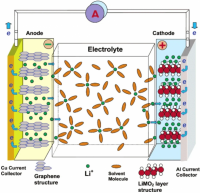
In the field of lithium batteries, "lithium deposition" is a term that appears very frequently. Whether it's fast charging, battery life, or low-temperature performance, many issues can ultimately be traced back to lithium evolution.For battery researchers, lithium deposition is almost a necessary concern; For ordinary users, it is one of the important factors affecting battery life.1. What is lithium depositionDuring normal charging, lithium ions will detach from the positive electrode, migrate through the electrolyte to the negative electrode, and embed into negative electrode materials such as graphite.Ideally, all lithium ions should enter the negative electrode structure.But when the charging conditions are not suitable, some lithium ions do not have time to embed into the negative electrode, and will directly obtain electrons on the surface of the negative electrode, forming metallic lithium deposition.This process is called lithium evolution.Simply put:The lithium that was supposed to 'enter the negative electrode' ended up 'piling up on the surface of the negative electrode'.2. Why does lithium deposition occurLithium deposition is essentially due to the inability of negative electrode lithium insertion speed to keep up with charging speed.When the speed at which lithium ions reach the surface of the negative electrode is greater than the speed at which they enter the interior of the negative electrode, lithium will deposit on the surface.The common causes are mainly as follows.Fast chargingThe larger the charging current, the more lithium ions reach the negative electrode surface per unit time.If the negative electrode cannot absorb in time, it is easy for lithium to precipitate.This is also one of the problems that fast charging technology always needs to solve.Low temperature chargingAfter the temperature decreases, the diffusion rate of lithium ions significantly decreases.At this point, even if the charging current remains constant, the lithium insertion ability of the negative electrode will decrease, thereby increasing the risk of lithium deposition.Therefore, many new energy vehicles will limit their fast charging power in winter.High SOC stateAs the battery approaches full charge, the available space in the negative electrode decreases.When continuing to charge, lithium ions are more likely to deposit on the surface.Therefore, lithium deposition often occurs in the later stage of charging.3. What problems will lithium deposition bringFirstly, there is capacity decay.The metallic lithium formed by sedimentation may not necessarily be able to participate in subsequent cycles again.As time goes by, the available lithium gradually decreases, and the capacity will decrease.Secondly, there is an increase in internal resistance.Lithium deposition can disrupt the original interface state, induce more side reactions, and continuously thicken the SEI film.More serious is the security risk.If the deposited lithium continues to grow, it may form needle like structures and even pierce the membrane, causing internal short circuits.4. How to reduce the risk of lithium depositionThe common methods currently include:Control charging rateOptimize the structure of negative electrode materialsImprove electrolyte systemImprove low-temperature kinetic performanceAdopting smarter charging strategiesEssentially, it is to enable lithium ions to enter the negative electrode more evenly and quickly.5. ConclusionLithium deposition is not an independent fault, but the result of internal dynamic imbalance in the battery.It will affect capacity, lifespan, and safety, and is also a challenge that must be faced in the development of fast charging technology.In a sense, understanding lithium evolution means understanding why lithium batteries age and why some batteries can achieve fast charging while still maintaining a longer lifespan.
-
03
2026-07
Why do lithium batteries need constant current before constant voltage charging
Many people find that the charging process of lithium batteries is usually divided into two stages when looking at the charging curve:First constant current (CC), then constant voltage (CV).This mode is almost applicable to mobile phones, electric vehicles, and energy storage batteries. So here comes the question...:Why not keep charging with constant current? Is it not possible to directly charge with constant voltage?The answer is actually related to the movement pattern of lithium ions inside the battery.1.What is constant current chargingConstant current charging, as the name suggests, refers to maintaining a constant current throughout the entire charging process.For example:1 Ah battery is charged at 1 A;A 10 Ah battery is charged at 10 A.At this stage, the charger will continuously input a fixed current to the battery.As lithium ions continue to embed into the negative electrode, the battery voltage gradually increases.2. Why use constant current firstBecause the battery is currently in a 'low power' state.There are still a large number of vacancies inside the negative electrode that can accommodate lithium ions.let me put it another way:Lithium ions are relatively easy to enter the negative electrode.At this point, using a larger constant current can quickly replenish the battery.In fact, about 70% to 90% of the capacity is filled during the constant current stage.So:The constant current stage is mainly responsible for "fast charging".3. Why can't I keep charging at a constant currentAs the battery level increases, the situation begins to change.The number of lithium storage sites in the negative electrode is decreasing.Continuing to maintain high current charging will result in:Polarization increaseIncreased battery heatingRising risk of lithium analysisEspecially when approaching full charge, the rate at which lithium ions enter the negative electrode decreases significantly.If a large current is still forcefully inputted, some lithium ions may not have time to embed into the negative electrode and directly deposit into metallic lithium.This is lithium deposition.Therefore, constant current charging must end before reaching the cut-off voltage.4. What is being done during the constant pressure phaseWhen the battery voltage reaches the set upper limit, the system enters the constant voltage phase.At this moment:The voltage remains unchanged;The current gradually decreases.It can be understood as:Give lithium ions more time to slowly enter the negative electrode.As the battery approaches a fully charged state, the current will decrease.Finally, the charging will end when it drops to the set value.5. Why is the constant pressure stage so slowMany people will find that:The phone charges quickly from 20% to 80%;But charging from 90% to 100% noticeably slows down.That's why.The goal of the constant pressure stage is not to pursue speed, but to ensure safety and longevity.If a high current is maintained for the last 10% of the battery, the aging rate of the battery will significantly accelerate.Therefore, later charging must be slowed down.6. What would happen if there was only constant pressureIn theory, it can also be charged.But in the initial stage, the current will be very large, which can easily exceed the battery's capacity.Not only is it inefficient, but it may also damage the battery.Therefore, in practical applications, constant voltage charging is rarely used alone.7. ConclusionLithium batteries adopt a charging method of "constant current first, then constant voltage", which essentially seeks a balance between charging speed, safety, and cycle life.The constant current stage is responsible for rapid energy replenishment;The constant pressure stage is responsible for ensuring safe filling.The seemingly simple two-stage charging curve is actually one of the most mature and reliable charging strategies for lithium batteries after years of development. Understanding this process also means understanding why the charging speed slows down as the battery approaches full charge.

-
04
2026-06
What are the advantages and disadvantages of sodium batteries compared to lithium batteries
In recent years, with the development of energy storage and new energy vehicles, sodium ion batteries have begun to frequently appear in industry discussions. Many people may ask: Since lithium batteries are already very mature, why still develop sodium batteries? What are its advantages and where are its shortcomings? In fact, this is not a matter of "who replaces whom", but more like a division of labor in technology under different conditions.1. Advantages of Sodium Batteries: More Suitable for Large Scale ApplicationsMore abundant resources and more stable costsLithium resources are relatively concentrated in distribution, while sodium is abundant in the crust and seawater, making it easier to obtain. In the long run, sodium batteries have advantages in raw material costs and supply stability.Low temperature performance is more friendlyAt lower temperatures, some sodium electrolyte systems can still maintain good discharge capacity. This is particularly important in northern regions or outdoor energy storage applications.Security has potential advantagesThe thermal stability of some sodium electric systems is good, and the risk is relatively controllable under high temperature or abuse conditions, which is conducive to reducing the system design pressure.2. Shortcomings of Sodium Batteries: There is still a gap in performanceLow energy densityDue to the larger radius and higher mass of sodium ions, the energy density of batteries is usually lower than that of lithium batteries under the same conditions. This means that there are disadvantages in the pursuit of long battery life scenarios.The material system is still being improvedCompared to the highly mature material system of lithium batteries, sodium batteries still have room for optimization in terms of positive and negative electrode materials, electrolytes, and interface stability.The industrial chain is not yet fully matureAlthough developing rapidly, sodium batteries still need time to accumulate in terms of scale, process stability, and long-term reliability.3. Where is the strength of lithium batteries stillIt must be acknowledged that lithium batteries still have advantages in multiple aspects after years of development:Higher energy density, suitable for long endurance needsMature technological system and complete industrial chainRich engineering experience and wide application rangeEspecially in the field of high-end power batteries, the position of lithium batteries is still difficult to shake in the short term.4. Application scenarios determine the technological roadmapIf two types of batteries are compared under the same standard, it is easy to draw one-sided conclusions. A more reasonable way is to see what scenarios they are suitable for.Lithium battery: suitable for scenarios with high energy density requirements, such as long-range electric vehiclesSodium batteries: more suitable for cost sensitive scenarios with less extreme volume requirements, such as energy storage, electric two wheelers, etcIn other words, one is more focused on "performance first" and the other is more focused on "cost and safety first".5. How will the future developFrom the current trend, sodium batteries are more likely to achieve large-scale applications in energy storage and other fields, rather than directly entering the high-end power battery market.With the continuous advancement of materials and processes, there is still room for improvement in the performance of sodium batteries, but their core advantages will still be concentrated in terms of cost and resources.In the foreseeable future, lithium and sodium batteries are likely to coexist for a long time, serving different scenarios separately. The real key is not which technology is "more advanced", but whether it is "more suitable".